
Q4 2025 Fraud Report by AB Handshake

Knowledge base
Share
This read pulls together our quarterly findings, explains what each fraud looks like in practice, shares real-world patterns and anecdotes, and closes with practical detection and mitigation advice driven by AB Handshake’s AI equipped Fraud Management System.
Telecom fraud never stops, it only changes. Q4 2025 is full of surprising events across our customer base, as we see fraudulent attacks continuing to attempt to break through defenses.
Our Q4 review focuses on the major fraud vectors observed in voice and SMS traffic monitored by AB Handshake Fraud Management System:
- IRSF
- IRSF – PBX Hacking
- P2S
- Wangiri – Inbound Attacks
- Wangiri 2.0
- Spam
- Flash Calls
- SMS AIT
1. IRSF
IRSF (International Revenue Share Fraud) typically includes fraudsters artificially driving traffic towards revenue share numbers, which fraudsters gain a profit from. IRSF may also often occur in combination with other fraud types such as Subscription Fraud, Stolen Phones, Roaming events, or most notably in this Q4 report, PBX Hacking which we will also discuss later in the report.
Q4 Highlights
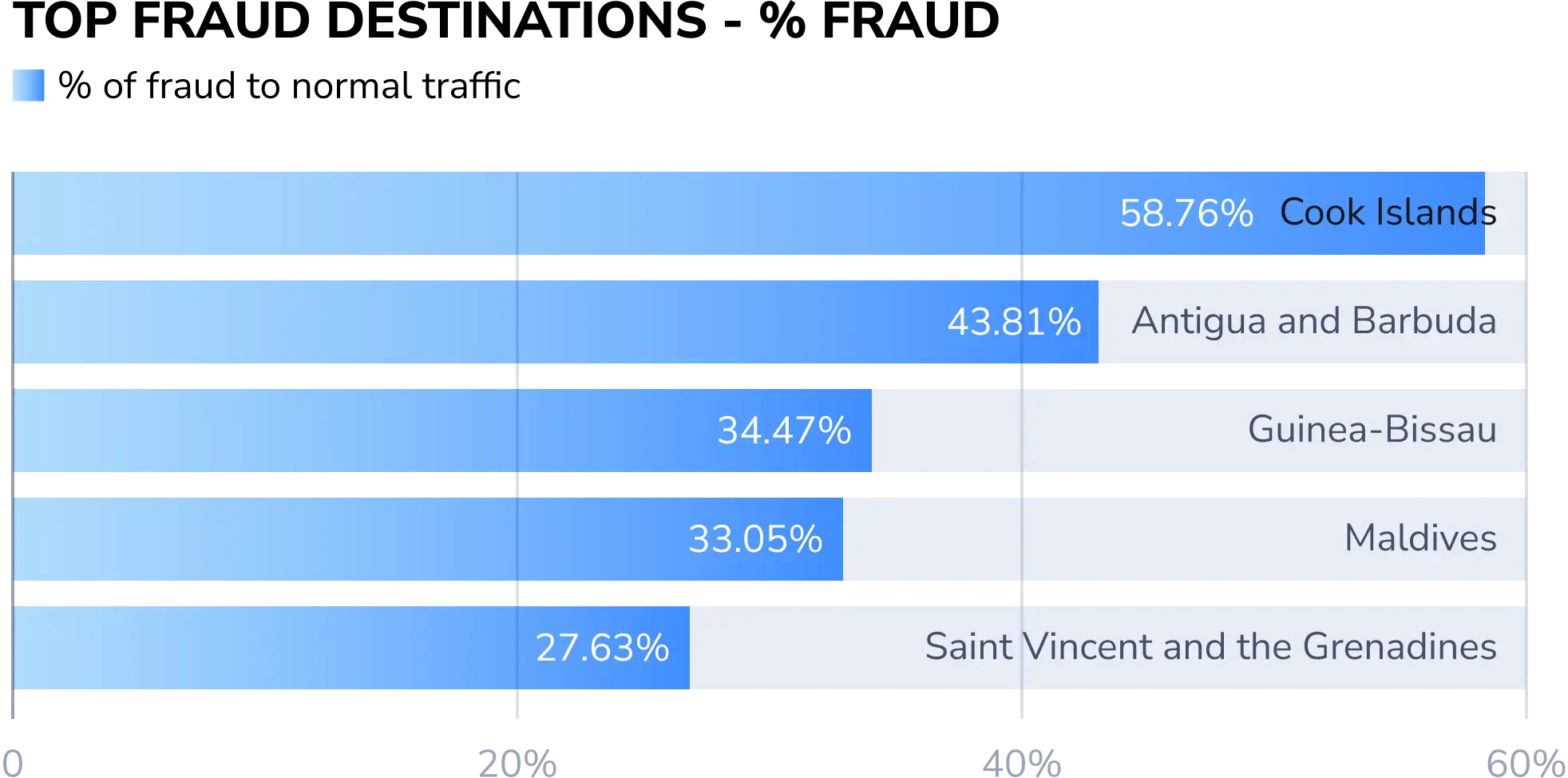
- Top country codes for IRSF terminating to them: Cook Islands led with a fraud ratio of 58%, followed by Antigua And Barbuda at 43%, and Guinea-Bissau 34%
The following dashboard identifies the country ranges with the highest ratio of IRSF Fraud to total call attempts terminating to that country range.
Why IRSF Detection Requires More Than Static Rules
While certain routes are well known for IRSF activity, fraudsters continually seek opportunities to target less obvious or emerging “hot” destinations. By purchasing revenue share numbers in these locations, attackers can avoid standard rules and threshold-based monitoring, placing greater reliance on a fraud management system’s ability to identify uncommon and evolving patterns.
The Cook Islands provide an illustrative example. As a popular holiday destination, the country can receive legitimate travel-related traffic; however, its numbering ranges also include purchasable revenue share numbers. Q4 showed more than half of all traffic terminating to the Cook Islands was identified as IRSF, a significant proportion for any destination.
This also highlights how perceptions of “normal” traffic can shift throughout the year. Seasonal travel patterns, combined with even a small number of fraud events, can significantly distort averages such as call volumes, durations, and timing. This underlines the need for advanced, AI-driven detection capable of distinguishing genuine changes in traffic behaviour from patterns that clearly match revenue share fraud characteristics.
2. IRSF – PBX Hacking
Understanding IRSF Traffic and PBX Hacking Methods
IRSF (International Revenue Share Fraud) typically includes fraudsters artificially driving traffic towards revenue share numbers, which fraudsters gain a profit from. IRSF may also often occur in combination with other fraud types such as Subscription Fraud, Stolen Phones, Roaming events, or PBX Hacking
PBX’s are often used as a ‘fraud method’ to commit IRSF, by fraudsters who are able to access badly secured PBX devices inside businesses, and use those to generate artificial traffic towards revenue share numbers. PBX hacking can be identified within typical IRSF attacks as the calls are often timed in one of two ways depending on the business profile: either for the calls to only occur during business hours (so nobody questions who is making calls during the night), or else to only occur outside of business hours (to ensure employees don’t notice constant busy lines during their work day).
Q4 Highlights
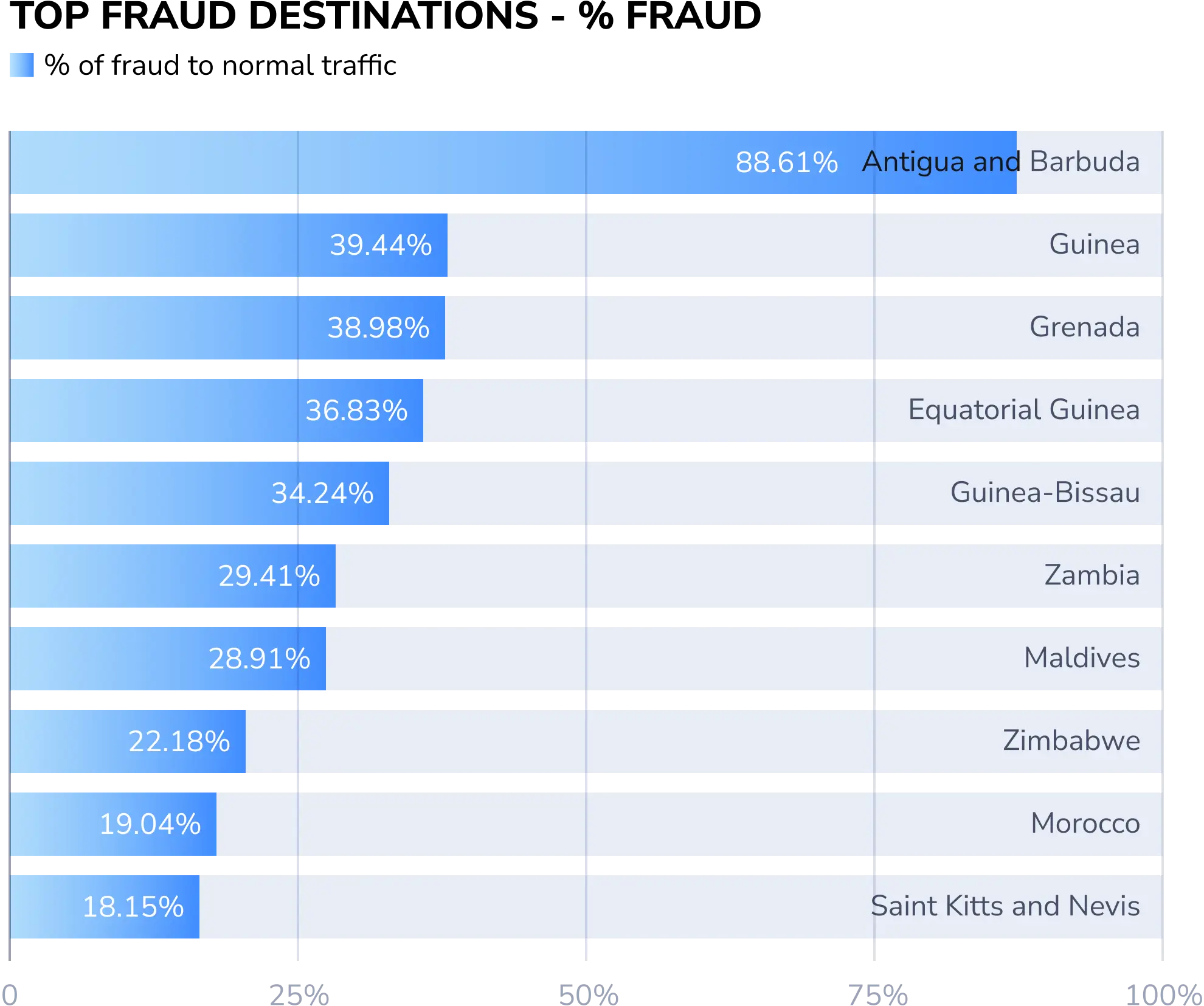
- Top country codes for IRSF terminating to them through PBX Hacking: Antigua and Barbuda recorded the highest ratio at 88%, followed by Guinea at 39% and Grenada at 3%.
The following dashboard identifies the country ranges with the highest ratio of PBX Hacking methods for IRSF to total call attempts terminating to that country range.
IRSF Impact on Low-Traffic Country Ranges
The impact of fraud terminating to a country range that receives relatively little overall traffic is clearly visible in this graph, with 88.61% of traffic to Antigua and Barbuda identified as fraudulent. This destination did not receive high call volumes from our customers during the quarter, which further highlights how pronounced the effect of IRSF attempts can be when they occur.
Operators experiencing IRSF activity may choose to respond by implementing controls such as automatic blocking for the affected country range, showing the need to leverage modern tools to block an attack automatically like what’s available within AB Handshake’s Fraud Management system, rather than relying on alerts to generate and blocking be performed manually.
3. P2S
Understanding P2S Traffic
P2S attacks typically involve automated bots or scripts abusing web forms or online verification processes to trigger voice-based OTP calls to revenue share numbers, which the fraudsters will gain revenue from. Such patterns often reveal systematic P2S attacks, where repeated automated attempts focus on specific destinations, highlighting them as potential hotspots for this type of revenue share fraud.
Q4 Highlights
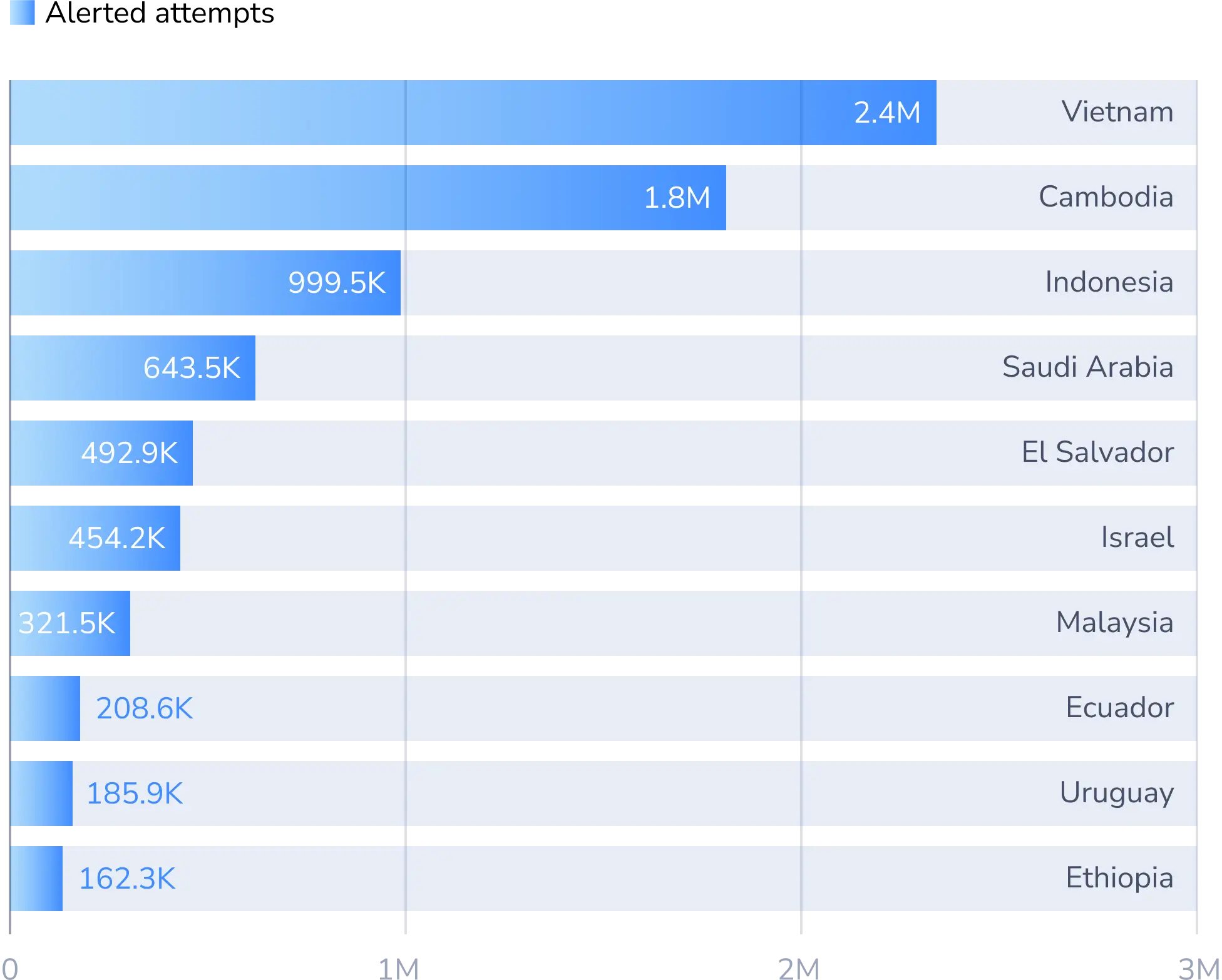
- Top country ranges for P2S callbacks terminating to them: Vietnam with 2.4 million calls, Cambodia with 1.8 million calls, and Indonesia and almost 1 million calls.
The following dashboard identifies the country ranges receiving the highest level of P2S fraud based on call count.
P2S Fraud Trends
P2S fraud has been quietly growing in recent periods. Increasingly sophisticated bots potentially enhanced by AI are now capable of targeting large numbers of online verification systems, triggering significant volumes of OTP (one-time password) callbacks to revenue share numbers from which fraudsters gain profit.
With several million calls directed toward the top recipient country ranges in this report alone, the scale of this activity highlights just how significant the problem has become, and why both operators and enterprises need to take action against this type of event.
This trend also suggests that many online systems lack the same level of fraud protection as modern telecom fraud management platforms. As a result, they are likely to be increasingly targeted by P2S attacks. If these systems struggle to identify or defend against well-known high-risk destinations, they will face even greater challenges when fraudsters shift toward more subtle and less obvious country ranges.
4. Wangiri
Understanding Wangiri Fraud
Wangiri fraud works by triggering short one-ring calls or missed calls to users from revenue share numbers, enticing innocent subscribers to call back. Those who do return these calls do not realize they are calling a revenue share number that the fraudster is generating profit from calls to. Other means may be done to entice the caller to stay connected on the line for longer, such as recordings of a phone ringing out, or a long voicemail, etc.
Q4 Highlights
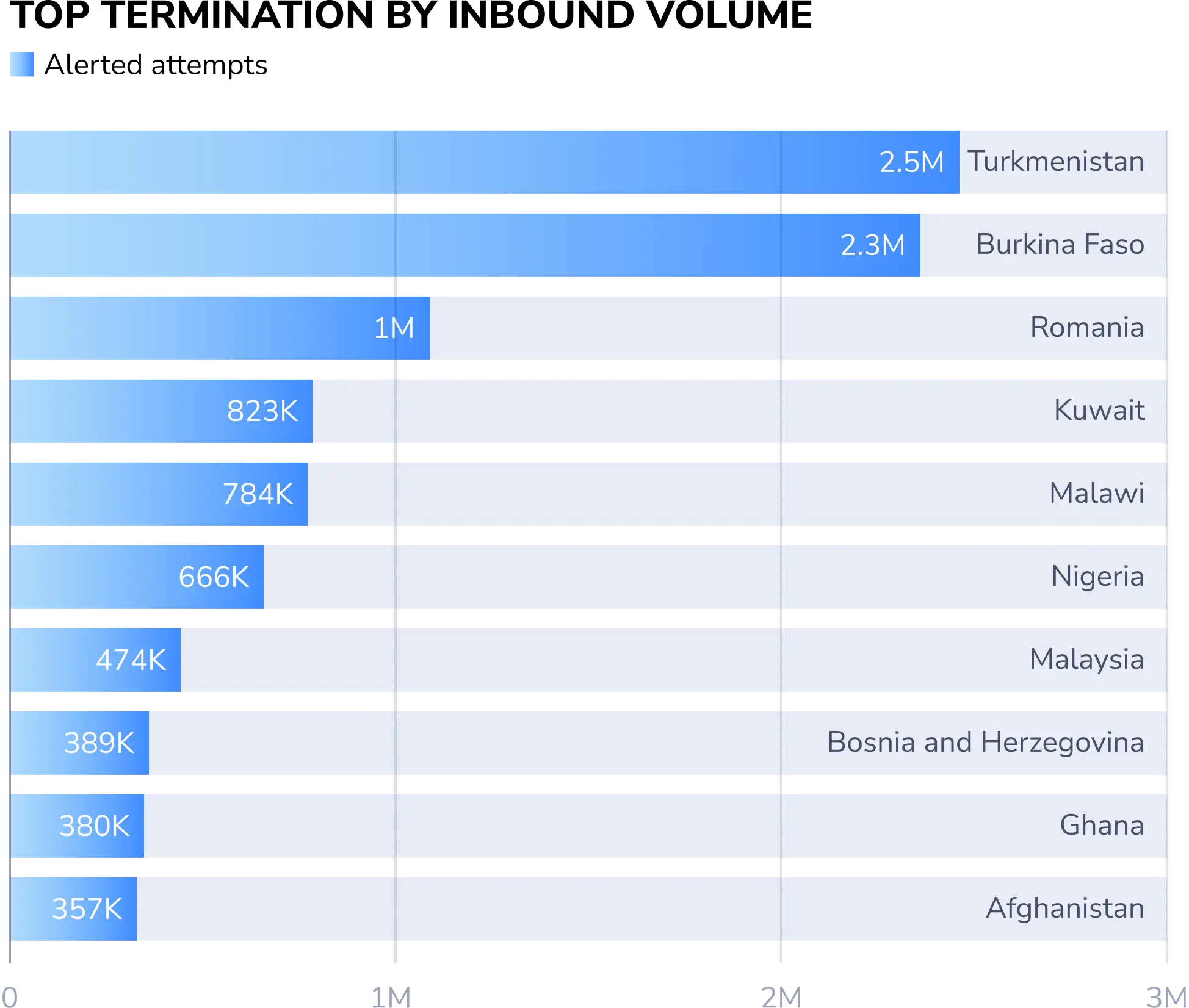
- Top country receivers for inbound Wangiri attack calls: Turkmenistan and Burkina Faso at 2 million each, followed by Romania at 1 million.
The following dashboard identifies the country ranges with the highest counts of inbound Wangiri attack calls.
Global Wangiri Activity and Emerging Threats
Wangiri attacks continue worldwide, with this quarter recording some of the largest attack attempts seen in recent times. As operators and carriers continue to strengthen their defences, fraudsters are increasingly forced to become more creative in their methods to avoid detection.
Wangiri provides an attractive option for fraudsters, as it allows them to target individual subscribers directly. This approach is often far easier to conduct than more traditional IRSF attacks, which typically require access to a SIM card, a compromised device, or other forms of direct network access.
5. Wangiri 2.0
Understanding Wangiri 2.0
Wangiri 2.0 typically involves automated systems or bots that submit revenue share numbers through online forms, triggering automated callbacks from enterprises or applications.
These callbacks are then monetized by keeping the line active, often using ringing tones or recorded loops to extend call duration and entice the caller to ‘stay on the line’.
Q4 Highlights
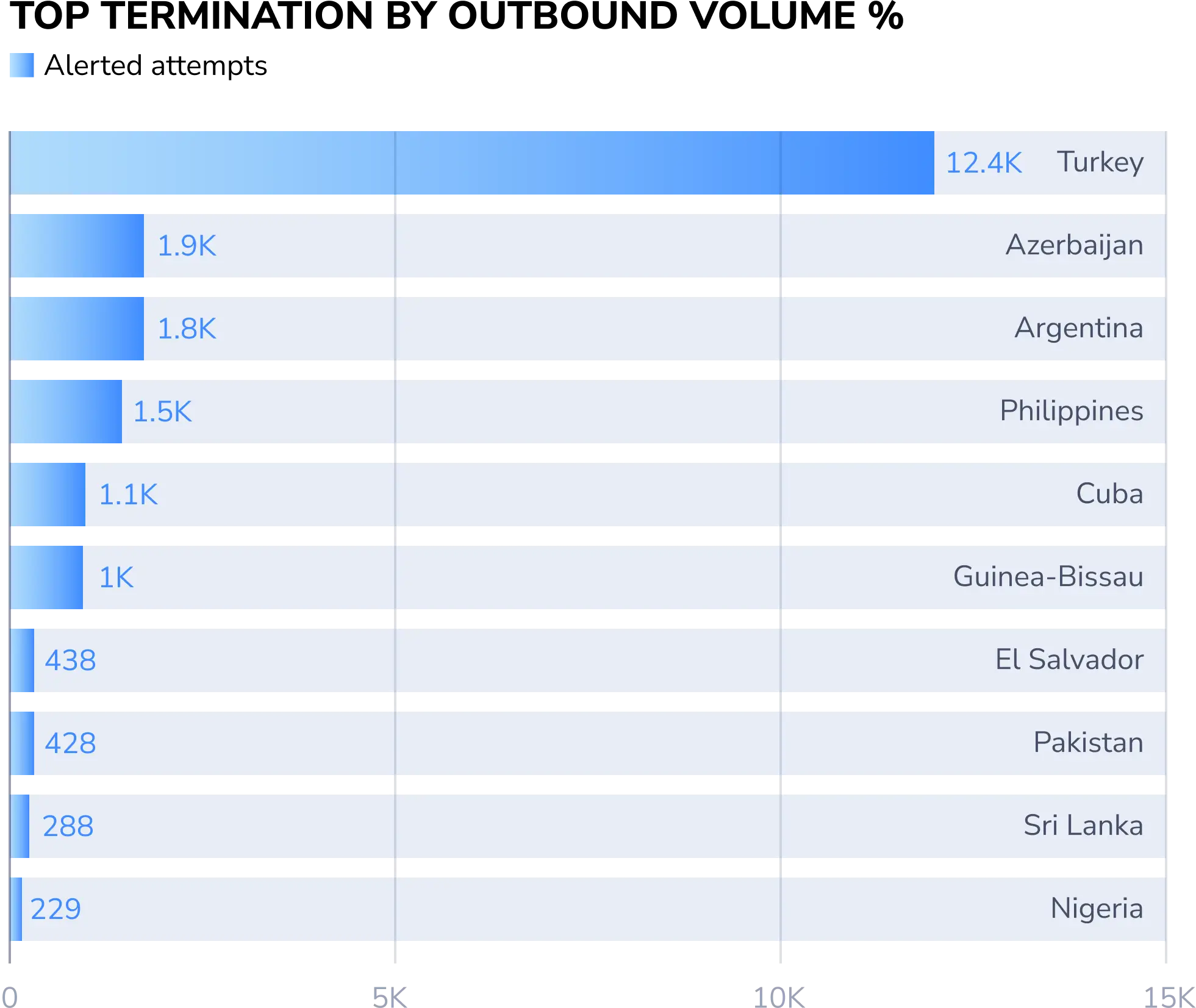
- Top country codes for terminating Wangiri 2.0 calls: Turkey 12.4k, Azerbaijan with 2k, and Argentina with 1.8k.
The following dashboard identifies the country code ranges with the highest calls from Wangiri 2.0 sources.
Wangiri 2.0 Fraud Trends
Wangiri 2.0 is showing high levels of activity across a wide range of country codes globally. Where fraudsters once needed to target individual subscriber MSISDNs, they can now simply submit revenue share numbers through online forms and automatically trigger callbacks from enterprises or applications, effectively guaranteeing a return call.
This quarter, we observed significant volumes terminating to Turkish Range, a destination not traditionally associated with revenue share fraud. This may signal a broader shift in fraudster behaviour, as attackers increasingly select more diverse and less obvious destinations in an effort to stay ahead of detection.
6. Spam
Understanding Spam Traffic
Spam traffic typically includes unsolicited robocalls or auto-dialed messages, often used for advertising, scamming, or phishing.
Q4 Highlights
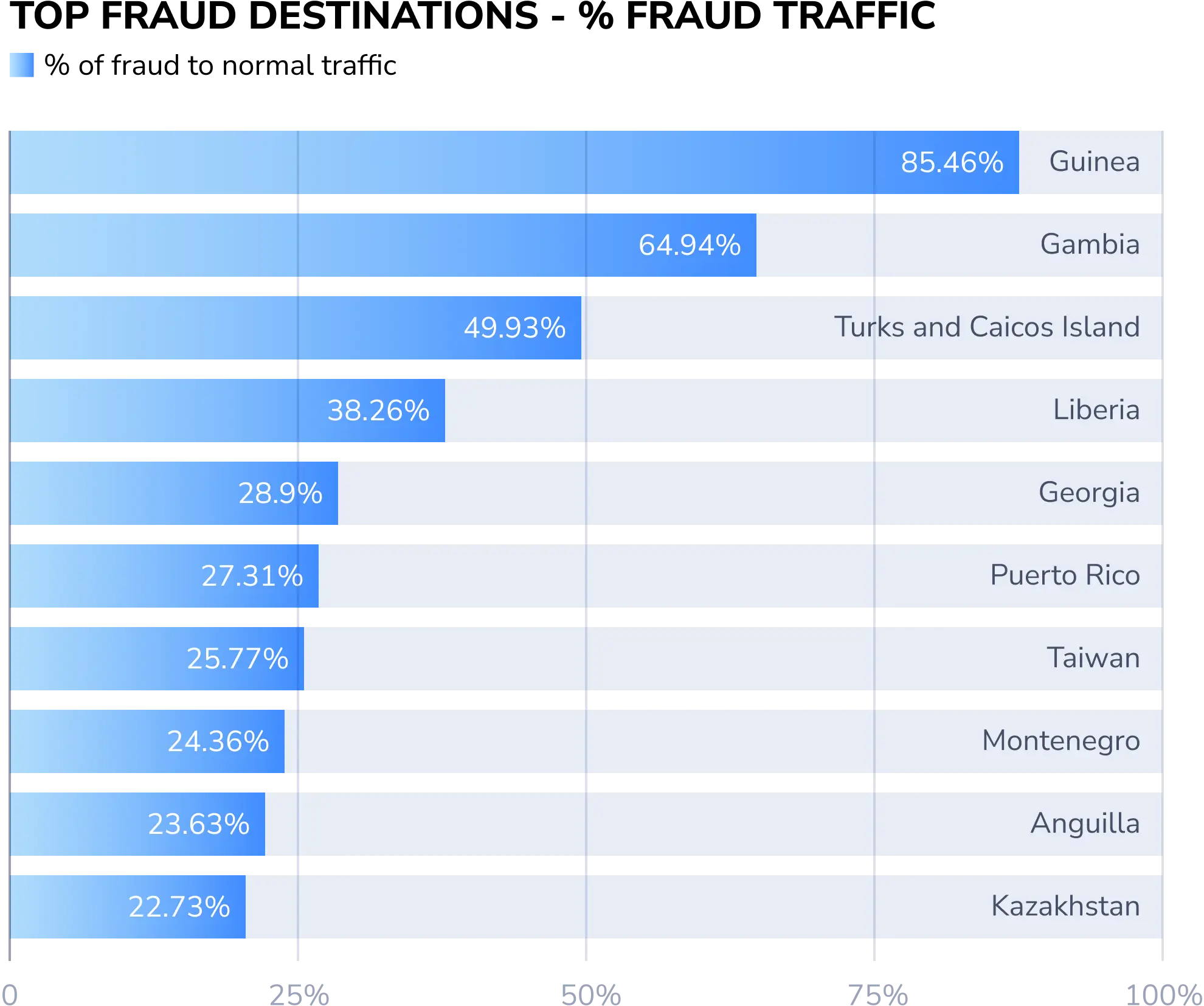
- Top receivers for inbound spam: Guinea lead with 85%, followed by Gambia at 65% and Turks and Caicos Islands at 50%.
Rising Spam Volumes and Validation Strategies
No one is surprised to see spam calls continuing to grow, but so too are the methods used to detect them, driven by increasingly advanced AI tools and techniques. Operators, however, are often constrained by the inability to confirm a call’s content or authenticity, limiting their ability to take decisive action.
This lack of intervention allows spam traffic to persist, leading to higher call volumes and declining pick-up rates, which in turn erodes trust in the authenticity of calls across the network.
Against this backdrop, AB Handshake’s Call Validation Technology provides a powerful solution. By enabling operators and enterprises to verify the authenticity of each call or SMS and confirm that it is genuinely from the stated origin, trust can be restored and fraudulent traffic effectively challenged.
7. Flash Calls
Understanding Flash Calls
Flash calls are often used for rapid one time password or two factor authentication (app sign-ins, one time password delivery) in place of traditional . Fraudsters abuse this mechanism to generate silent calls at scale or to farm responses from carriers and APIs.
Q4 Highlights
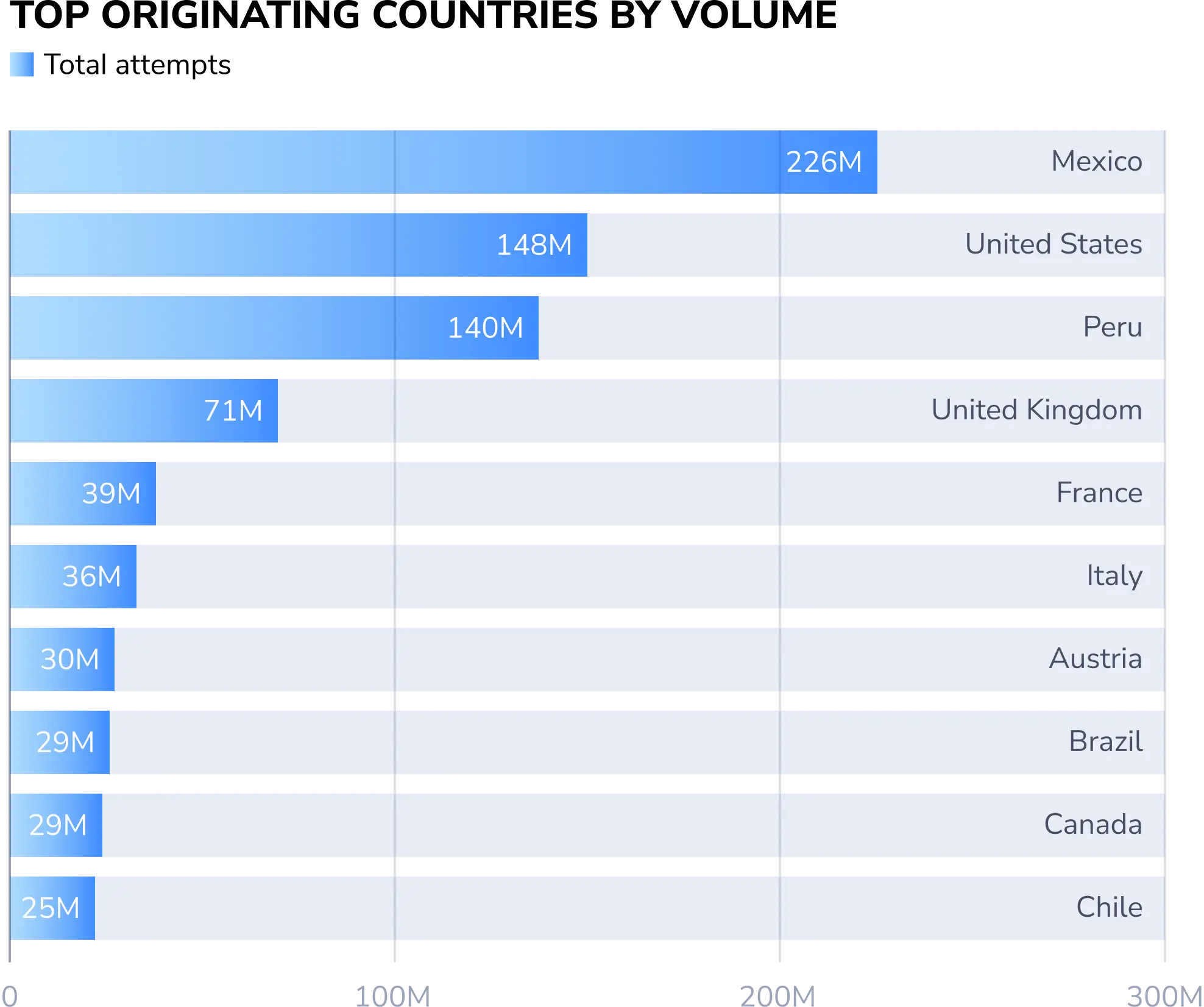
- Originating Country Code Ranges: Mexico leads with an overwhelming 226M total attempts, followed by the United States 148M and Peru 140M.
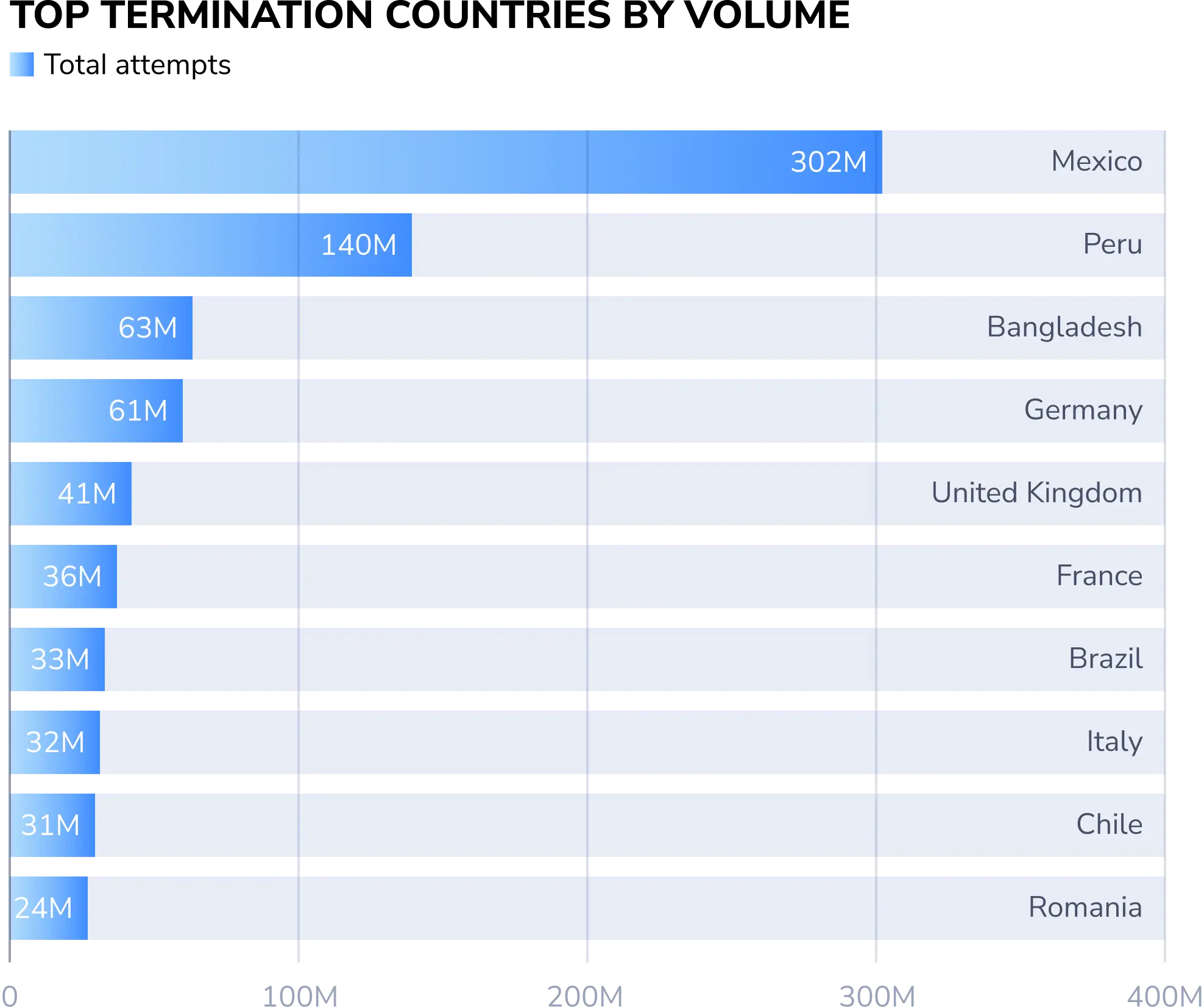
- Terminating Country Code Ranges: Mexico leads with an overwhelming 203M Total attempts, followed by Peru 140M and Bangladesh 63M.
- Top 10 Destinations with Local Numbers: Mexico leads with an overwhelming 223M attempts, followed by Peru 139M and the United Kingdom 34M.
The following dashboard identifies the country ranges with the highest levels of Flash Calls originating from them
The following dashboard identifies the country ranges with the highest levels of Flash Calls terminating to them
The following dashboard identifies the country code ranges with the highest levels of local Flash Calls originating from and terminating to them
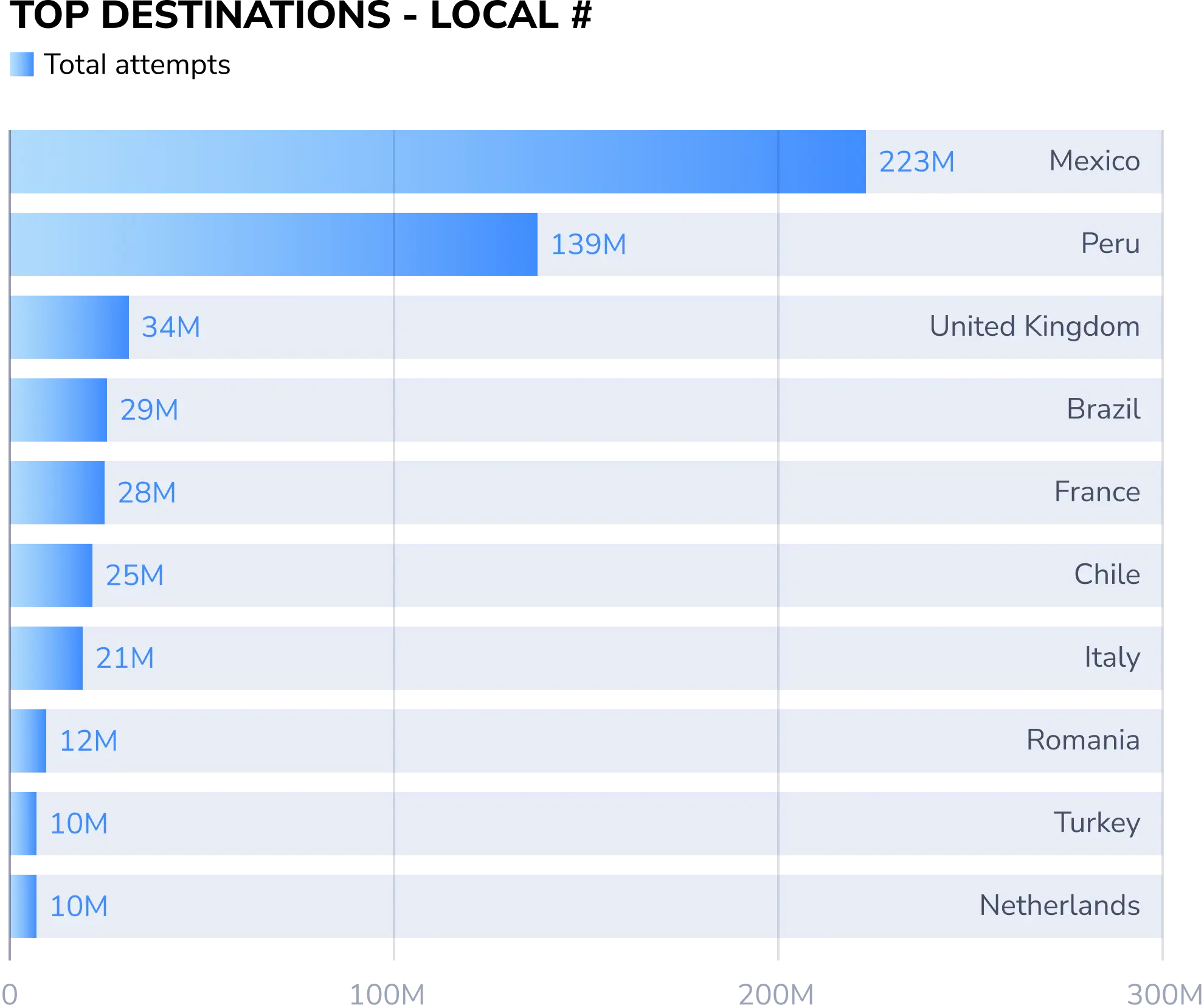
What the Data Tells Us
Flash Calls continue to grow, with hundreds of millions of attempts identified in the last quarter alone. This scale clearly highlights the urgent need for operators to respond. As the A2P market continues to redefine itself amid increasingly challenging conditions, operators are under growing pressure to act now.
8. SMS AIT
Understanding SMS AIT Traffic
This section highlights the top 10 country code ranges where SMS AIT (Artificial Inflation of Traffic) messages were most frequently terminated i.e., where the artificial A2P SMS’s were delivered during the quarter. High termination volumes suggest that these ranges are being used as endpoints for artificially inflated SMS activity, often with no legitimate user behind the traffic.
Q4 Highlights
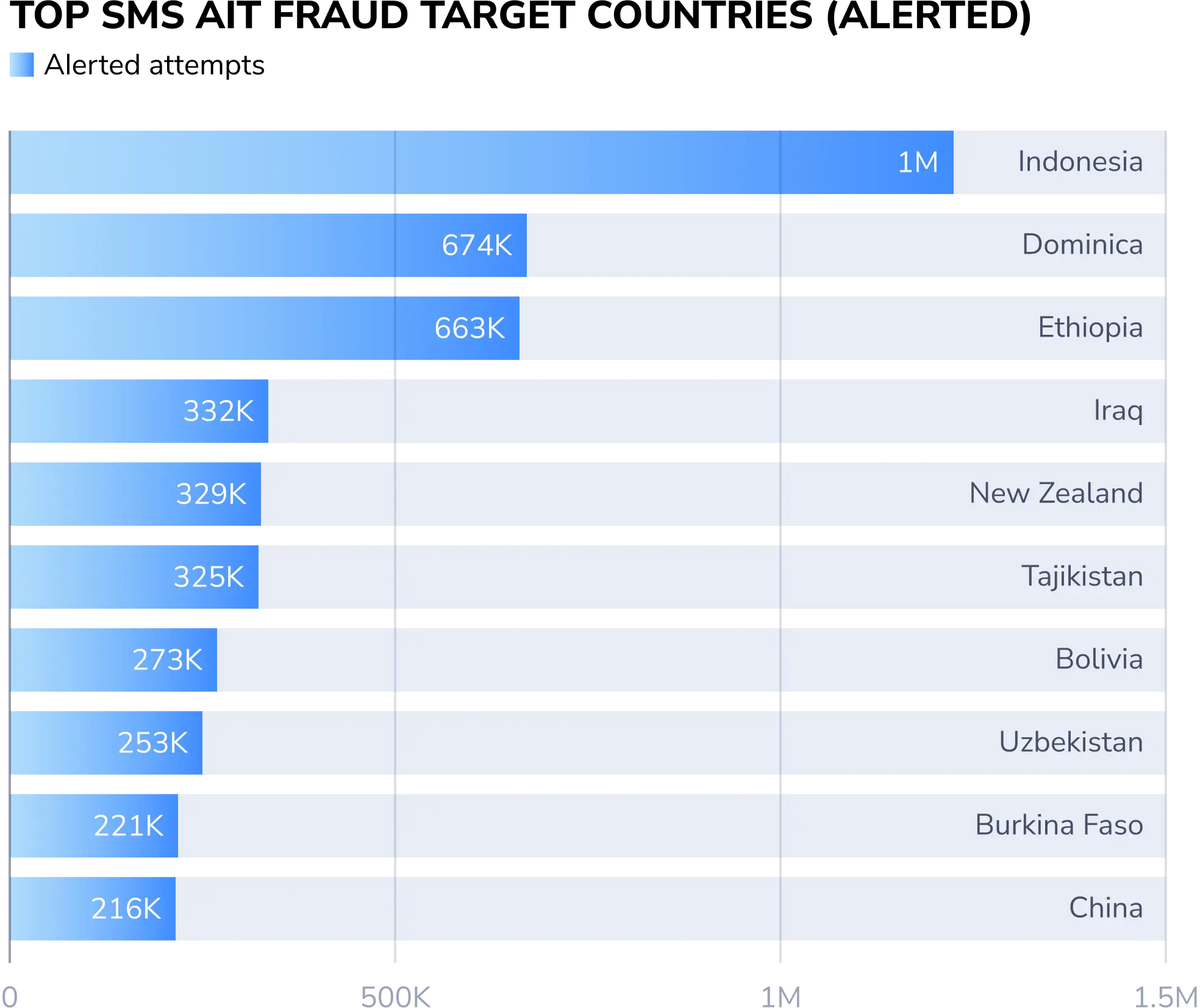
- Top SMS AIT Country ranges: Indonesia leads with 1 million, Dominica 674 K, and Ethiopia with 663K.
The following dashboard identifies the country ranges with the highest level of SMS AIT terminating to them.
SMS AIT: Emerging Destinations and Operator Challenges
We see several surprising entries on this list, including Iraq, which typically does not receive large volumes of international traffic and would not normally appear on hot destination lists for telecom fraud. New Zealand also appears, despite not being associated with any established high-risk country databases for fraudulent traffic.
This could potentially indicate that SMS AIT fraudsters have yet to be meaningfully challenged in a way that forces them to conceal or diversify their activity. As a result, there is little incentive for them to hide this traffic at all.
While many fraud management systems remain unable to detect SMS AIT, even when volumes spike sharply toward well-known high-risk destinations, AB Handshake’s system is able to identify this activity and expose the full extent of its impact on enterprises.
Q4 Discussion Topic: SMS AIT is no longer hiding, and that’s the most dangerous sign of all
SMS AIT (Artificial Inflation of Traffic) is one of the most structurally damaging fraud types in the telecom ecosystem. Unlike spam or phishing, its goal is not to deceive an end user, but to silently manufacture large volumes by generating large quantities of SMS traffic with no legitimate recipient and no genuine business purpose.
AB Handshake’s detections this quarter delivered some of the strongest indicators yet that SMS AIT activity is continuing to expand.
What stands out is not just the scale of this activity, but the lack of disguise. These campaigns are not attempting to blend into traffic or mask themselves with low-and-slow behaviour. Instead, they appear increasingly confident that many networks still lack the tooling required to effectively challenge them.
The most concerning trend in Q4 is that fraudsters no longer feel pressure to hide SMS AIT activity. In contrast to voice fraud where attackers constantly adapt destinations, timing, and patterns to evade controls, SMS AIT commonly presents with the following characteristics:
- Concentrated delivery into specific country ranges
- Repetitive and predictable routing paths
- Sustained high volumes
- No corresponding user engagement
This points to a troubling reality: in many environments, SMS AIT remains effectively invisible unless operators and enterprises are using AI-enhanced fraud detection systems, such as AB Handshake’s. SMS AIT is uniquely dangerous because it exploits trust between systems, not people, and has vast effects on revenue. Even more concerning is the emergence of unexpected country range destinations. When countries with historically low international SMS demand suddenly receive large volumes of inflated traffic, it highlights how heavily many fraud strategies still rely on static hotlists rather than adaptive, AI driven detection. Traditional controls struggle because they focus on message content or sender IDs, and without real-time visibility into destination risk, traffic intent, and historical patterns, inflated traffic can appear deceptively normal.
What Success Looks Like and How We Get There
Stopping SMS AIT requires a fundamental shift in approach: moving beyond basic filtering toward AI-enhanced fraud detection, combined with real-time validation capabilities. AB Handshake’s SMS Validation technology is based on cross-validation of each SMS directly between originating and terminating enterprises or operators via an out-of-band channel. Based on this validation, traffic can be blocked or allowed to proceed without intervention.